

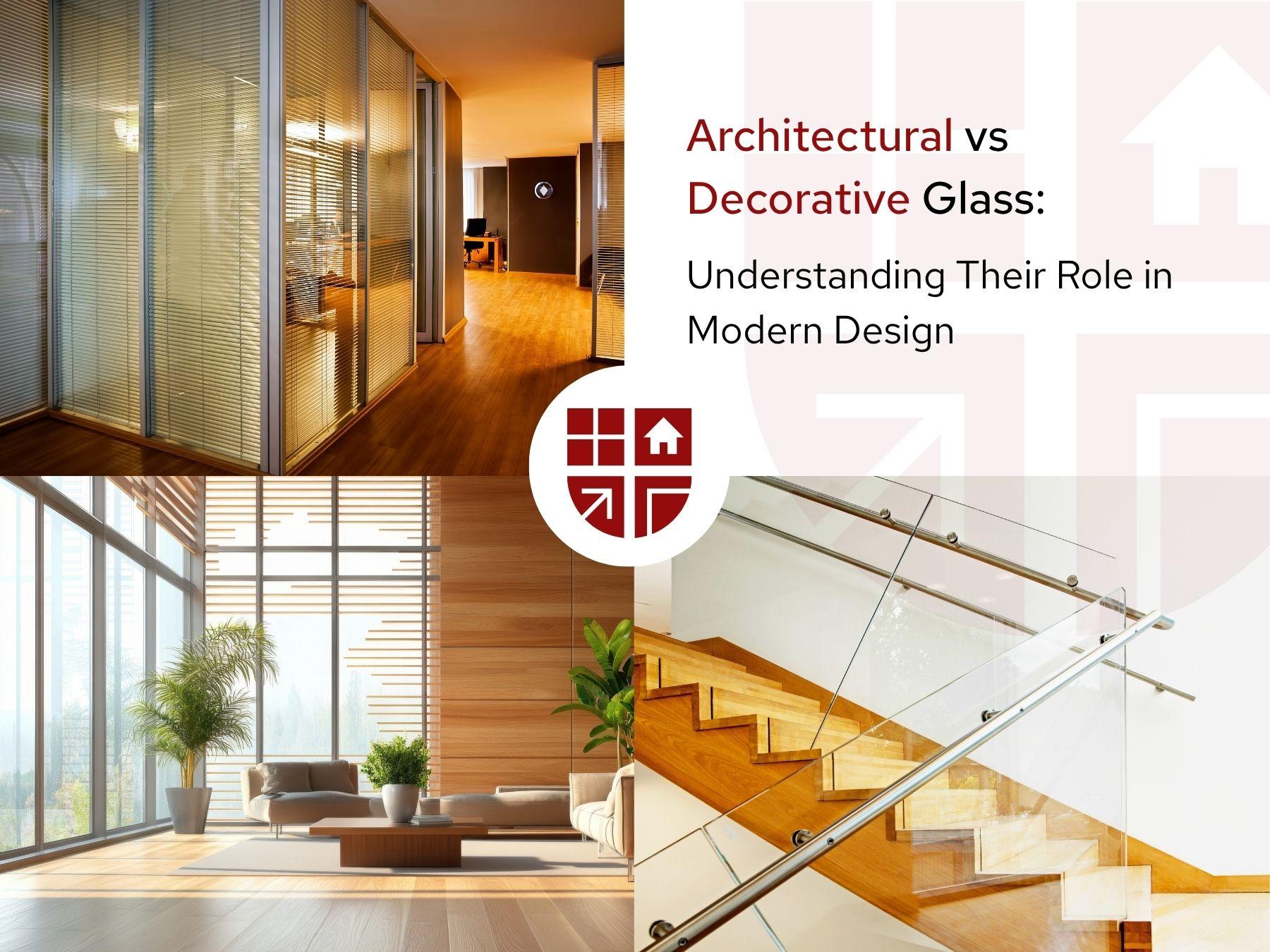
Glass is one of the most functional materials within the built environment. It forms facades and rooflights, shapes doors and partitions, and provides clean, modern finishes to bathrooms and kitchens. And more than anything else, it can prevent falls, withstand impact, insulate, and manage noise levels.
Ultimate Glass Solutions (UGS Ltd.) operates within it daily, designing, supplying, and installing systems that strike a balance between appearance, safety, and performance. The team helps architects, contractors, and homeowners match the right finish to the correct safety substrate, document BS/EN compliance, and avoid costly over- or under-specification.
Without a balance between structure and visual elements, a loss of safety or an increase in expense can result. A balustrade that is engineered as if it were a splashback will not meet line-load requirements; a shower screen engineered as if it were a facade will be over-engineered and slow to purchase.
This article defines the differences between architectural and decorative glass, explains how each is tested in the UK, and outlines their respective roles in projects. The following sections outline the majority of UK specifications, including definitions and features for each type, as well as compliance hooks available for use on-site.
Architectural / Structural Glass
Structural (or architectural) glass is applied in cases where the pane carries a load, is safety-critical, and requires exposure to the weather. It enhances the power and enclosure of the building and is a constituent component of an entire design plan, which includes panes, fixings, seals, channels, and frames that all collaborate.
Facades, canopies, roof glazing, glass floor, frameless entrances, etc. They are principally characterised by:
- Load-bearing or structural bonding. The pane supports itself, attached components, or the envelope under wind, impact, and occupant loads.
- Designed and BS/EN tested. BS 6262 (glazing), BS 6180 (barriers/balustrades), BS EN 1991-1-1 (imposed loads), BS EN 12150 (toughened), BS EN 1279 (IGUs) and BS EN 14179 (heat-soaked toughened).
- Safety behaviour defined. Hardened glass disintegrates into very small particles; laminated glass holds them together and provides residual containment, which is crucial in barriers and floor panels.
- High mechanical strength. Constructed in such a way that it can endure wind pressure, impact, and loads on the line by occupants leaning and pushing.
- System approach. The performance includes certified fixings and support profiles, edge cover, drainage, gaskets and isolation materials.
- Inspection and documentation. Calculations or test evidence confirm panel sizes, fixing centres, and postbreakage behaviour.


Design and Safety
In the UK, architectural glass must comply with Building Regulations and other relevant BS/EN standards, such as impact, people loads, energy, and solar control, as well as, where necessary, fire and security regulations.
BS EN 12600 pendulum testing classifies behaviour by drop height and break type; 1B1 is typical for doors and guarding. For fall prevention (balconies and landings) design to BS 6180 with EN 1991-1-1: residential 0.36–0.74 kN/m, offices/public circulation 1.5 kN/m, crowd areas up to 3.0 kN/m. The interlayer should be laminated make-ups; this is used because the assemblies should also stay a barrier against breakage until the area is safe.
In the case of external assemblies, Part L and BS EN 1279 specify the U-value and g-value, and also rely on condensation control. Fire performance may only be considered as a viewed system (glass, frame, and seals) with an EI rating, such as EI 30 or EI 60, where security glazing using BS EN 356 is required, as necessary.
Lastly, glass-size: monolithic toughened elements track in 6 to 19 mm thickness, whereas laminated toughened balustrade elements are 11.5 to 25.5 mm thick. Vegetable High-performance IGUs have an overall thickness of 24 to 48 mm. Walk-on rooflights and floors are typically dual-laminate with anti-slip surfaces, and their precise compositions must be determined by calculating and testing.
Interior / Decorative Glass
Glass for decoration (interior) is described in terms of appearance, privacy, branding and light control. It is non-load-bearing but can still be safety glass, particularly where people might bump into it or where it is installed near baths, showers, or doors. Essential elements that define decorative glass are:
- Non-load-bearing role. The pane defines space, diffuses light, or provides privacy; it does not resist imposed loads or serve as guarding.
- Finishes and textures. These might include: Back-painted (commonly colour-coordinated to a RAL or corporate scheme), acid etched/satin, sandblasted, patterned/rolled, ceramic frit, digitally printed, tinted, mirrored, and switchable privacy glass with PDLC technology.
- Safety substrates where necessary. Those specified in BS EN 12150: beware of low-iron glass, which reduces light transmission. Where higher clarity is desired with impact protection, as defined in BS EN 14449, low-iron glass is a suitable option for achieving this.
- Ease of replacement. While it is simpler to replace decorative glazing than structural glazing, attention must still be paid to edge quality and tolerance to ensure longevity and maximise cleanability.
This kind of glass is typically used for:
- Shower screens and bath surrounds.
- Glass partitioning and office walls.
- Interior doors and full-height screens.
- Kitchen splashbacks and bathroom feature walls.
- Mirror walls, display cabinets and furniture glazing.
Decorative glass defines space without considering its structural functions. Select the finish first, and then apply the relevant safety substrates where there may be risks to users from collision damage or moisture, such as in bathrooms and showers. While it is simpler to replace rather than use structural glazing, clean finishing, tight tolerances, and careful installation remain essential to longevity and the final appearance.


Design and Safety
Even if used decoratively, glass in "critical locations" must comply with Part K of the Building Regulations. If it is near doors, on floors, or in bathing zones, specify safety glass and the correct BS EN 12600 impact class. Shower screens are typically 8-10 mm thick, toughened, and feature an easy-clean coating.
Where there are large areas of plain glass, it must be made visible with either two bands or an approved pattern, appropriately positioned between 850mm and 1000mm, or between 1400mm and 1600mm, above the final floor level, or across the full-glazed area with sufficient contrast to meet the requirements.
Acoustic performance can be essential in standing construction: interlayers can improve Rw values by 3dB to 8dB for average performance, while acoustic laminates can help partitions to meet requirements of 38dB to 45dB Rw. For on–off privacy, PDLC glass reverses from translucent to clear, allowing access to feeding cables and gear while coordinating with the facade engineer if incorporated into an IGU unit.
Finally, it is the details that make the difference: attention to a consistent polishing finish, flat polished edges where visible and not elsewhere, and so on. The fit should not cause the glass to be misaligned on incorrect bearing points, potentially leading to delayed failure of structural integrity. Although it might not matter, it is good to check the tolerances to avoid it in any case. Provided the fundamentals are in place, interiors can be made safe, readable, durable, and maintainable.
Weight-Bearing & Load-Performance:What Sets Them Apart
The comparison table highlights the main differences between architectural and interior glasses in terms of their involvement in loading, resistance to the elements, compliance with safety requirements, and their primary role in acting as a finish for light, privacy, or branding.
| Property | Architectural/Structural Glass | Interior/ Decorative Glass |
| Primary role | Load-bearing, weather-resistant, safety-critical | Aesthetic, partitioning, privacy |
| Typical location | External facades, balustrades, canopies, floors, rooflights | Interior walls, office fronts, shower enclosures, splashbacks |
| Glass type | Toughened, heat-strengthened, laminated (including ionoplast), IGUs; heat-soaked where necessary | Toughened or laminated safety glass; back-painted, etched, pattered, mirrored, printed, PDLC |
| Typical thickness | 10-60mm monolithic or multi-laminate, sized to span and load | 6-12 mm typical; thicker where acoustics or safety require |
| Load resistance | Designed for wind, impact and line loads (BS 6180/ Eurocode 1) | Non load-bearing: local impact only where necessary |
| Building regulations | Structure (Part A), Glazing Safety (Part K), Fire (Part B), Energy (Part L), Access (Part M), Security (Part Q) | Glazing Safety (Part K) and Access (Part M) as needed |
| Test Standards | BS EN 12150 / 14449 / 12600 / 1279 / 14179; BS 6180 for barriers | BS EN 12150 / 14449 / 12600 for interior safety |
| Engineer input | Design, calculation and certification required for intrinsic safety | Usually not needed (apart from exceptional cases) |
| Maintenance | Periodic inspection of fixings, seals, drainage | Regular cleaning will protect the blasted or etched finish |
Loads, exposures, and compliance are the factors that classify an architectural glass, and they usually require calculation and certification. If it's just about appearance and feel, choose an architectural one. However, safety glass must still be used in critical areas, and details must be well addressed so that the installation can function well, regardless of its appearance.
Applications in Practice: How UGS Applies the Right Glass
The following table cross-references typical UGS applications by category, glass type, and performance, which influence the selection.
| UGS Application | Glass Type Used | Category | Performance Focus |
| Glass walls (structural areas) | Hardened or reinforced defence glass, and in this case, fin or beam designs are commonly built into the glazing | Architectural | Strength, deflection control, safe breakage, edge stability |
| Glass dividers (non-structural) | Heat-strengthened or laminated with aesthetic treatments | Interior |
Light transmission, privacy, acoustic control, clean edges |
| Shower screens | 8–10 mm hardened with fast-cleaning coating | Interior | Wet-area durability; EN 12600 impact classification |
| Balustrades and juliets | 13.5–25.5 mm bonded heat-strengthened; ionoplast interlayers, with increased loads | Architectural | Line load compliance to BS 6180, post-breakage containment |
| Facades and curtain walling | Laminated or IGU assemblies with low-E and solar control | Architectural | Wind load, U/g-value, weather performance, thermal stress checks |
| Rooflights and canopies | Toughened-toughened laminates; IGUs for thermal control | Architectural | Impact safety, slip resistance for walk-on, drainage and access |
| Cladding and spandrels | Back-painted or enamelled toughened/laminated panels | Architectural/ Decorative | Homogeneous colour, resistance to thermal shock, weathering |
| Internal partitions | 10–12 mm toughened or 12.8–16.8 mm acoustic laminates | Interior/ Architectural |
Rw targets, manifestation (Part M), tidy interfaces to ceilings/floors |
| Mirrors and feature walls | Mirror-grade with safety backing; low-iron for true colour | Interior | Colour fidelity, moisture protection, edge sealing |
Suppose the architectural glass is securing an advantage, withstanding the factors, or meeting either thermal or acoustical requirements. It does the structural loading codes, as well as the performance specifications. In the case of ornamental glass, whether used for lighting, privacy, or branding purposes, it must be paired with safety glazing in high-risk areas. In overlaps, more demanding requirements are applied, and the area of concern is delineated to establish a process that ensures a good installation and detail, including edge, tolerance, drainage, access, and maintenance requirements.
Final Thoughts
Glass has long since outgrown its role as a view-framing medium. It features facades and skylights, doors and partitioning, as well as smooth finish solutions for the kitchen and bathroom.
The Ultimate Glass Solutions (UGS Ltd) bridges the gap between structural and interior glass, helping architects, contractors, and individual consumers select finishes that meet the appropriate safety standards of the supporting material. An excellent working process ensures that projects are completed on time. That functionality, evidence, and precision that transform a drawing into a stable and permanent installation.
The balustrades that support, the facades that work, partitions that provide privacy and a sense of confidentiality, showers that wash easily and safely – all these products are the result of a properly directed will to create a mature experience, one that is incorporated with thoughtful care. Where there are overlaps in usage, use the safer option and provide a justification for your choice.
All that end-to-end is backed by Ultimate Glass Solutions (UGS Ltd). The staff evaluates the plans, prescribes the constructions, and records conformity, as well as delivering and repairing the systems to trial requirements, including prescribing glass, fixings, and fastening techniques. Hence, the finish looks right and the performance holds up. If you have a scheme to sanity-check or a specification to tighten, bring it to UGS to help you select, prove it on paper, and deliver it on site.